

Imagine you wake up with itchy bites but see nothing on your sheets. That is the worst part about bed bugs. They are experts at staying invisible. That's why understanding bed bug hiding places is the only way to find them before the problem blows up. These tiny insects do not just sit on top of your mattress. They squeeze into gaps you would never think to check.
So what are the real bed bug hiding locations? And where do bed bugs hide during the day when you are walking around? This guide walks you through every crack, crevice, and corner these pests love. You will also learn where bed bugs hide in walls, can bed bugs get in pillows, and do bed bugs live inside the mattress. By the end, you will have answered to all these questions and know exactly where to look.
Why Knowing Bed Bug Hiding Places Matters
Bed bugs are nocturnal and feed on your blood while you sleep, then disappear before sunrise. That is why you rarely see them out in the open. Their survival depends on finding tight, dark spots close to their food source, which is you. If you do not know their favorite bed bug hiding places, you will waste time treating the wrong areas while they multiply somewhere else.
Another reason this matters is that early detection saves you money. A small infestation limited to one bed bug hiding location is easy to treat. But once they spread to multiple spots, you are looking at a much bigger job. That is why experts always start by inspecting the most common bed bug hiding locations. Understanding where do bed bugs hide during the day prevents a minor issue from becoming a crisis.
The Most Common Bed Bug Hiding Places in Your Home
Finding where these pests reside requires checking the most frequent spots they choose for shelter.
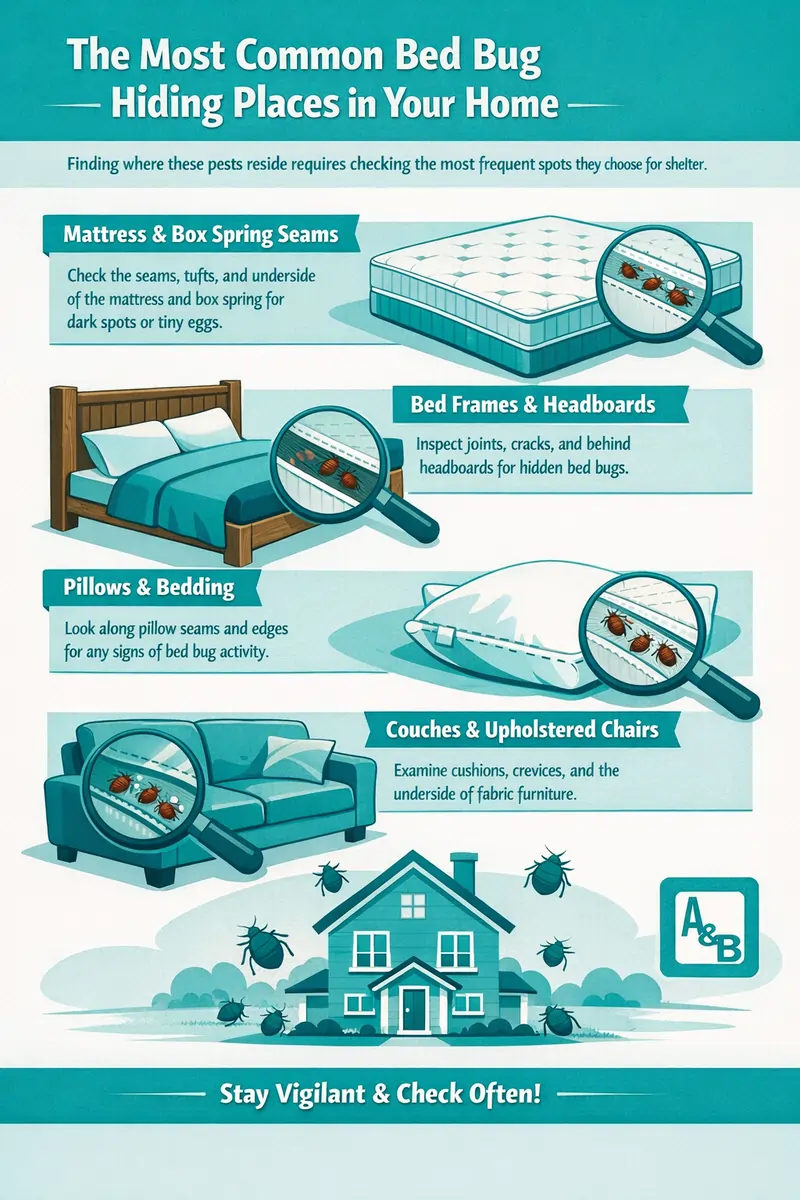
Mattress and Box Spring Seams
The seams, tufts, and folds of your mattress are prime real estate for bed bugs. They tuck themselves into the stitching where the fabric meets. The same goes for box springs. The underside corners and the fabric covering the bottom are classic bed bug hiding places. Run your finger along the seams. If you see dark spots or tiny cream colored eggs, you have found them.
Bed Frames and Headboards
Wooden bed frames have joints, screw holes, and cracks. Metal frames also have hollow tubes and brackets. Headboards, especially upholstered ones, are also some of the sneakiest bed bug hiding locations. They can easily live behind such fabric without ever touching the mattress. So, always check the gap, every corner, and every fastener for any signs of bed bugs activity.
Pillows and Bedding
Pillows have seams, labels, and sometimes small openings. Bed bugs do not burrow into the filling like dust mites, but they hide in the outer fabric layers and the piping around the edges. This is one of the strongest bed bug hiding places. So always flip your pillows over and inspect the stitching carefully.
Couches and Upholstered Chairs
Your living room furniture is just as vulnerable as your bed. Cushion seams, the space between the armrest, and the underside of the fabric are all bed bug hiding locations. If someone sleeps on the couch, bed bugs will happily move in.
Hidden Bed Bug Hiding Places You Might Miss
Beyond the bed, these insects find refuge in various structural elements of the room.
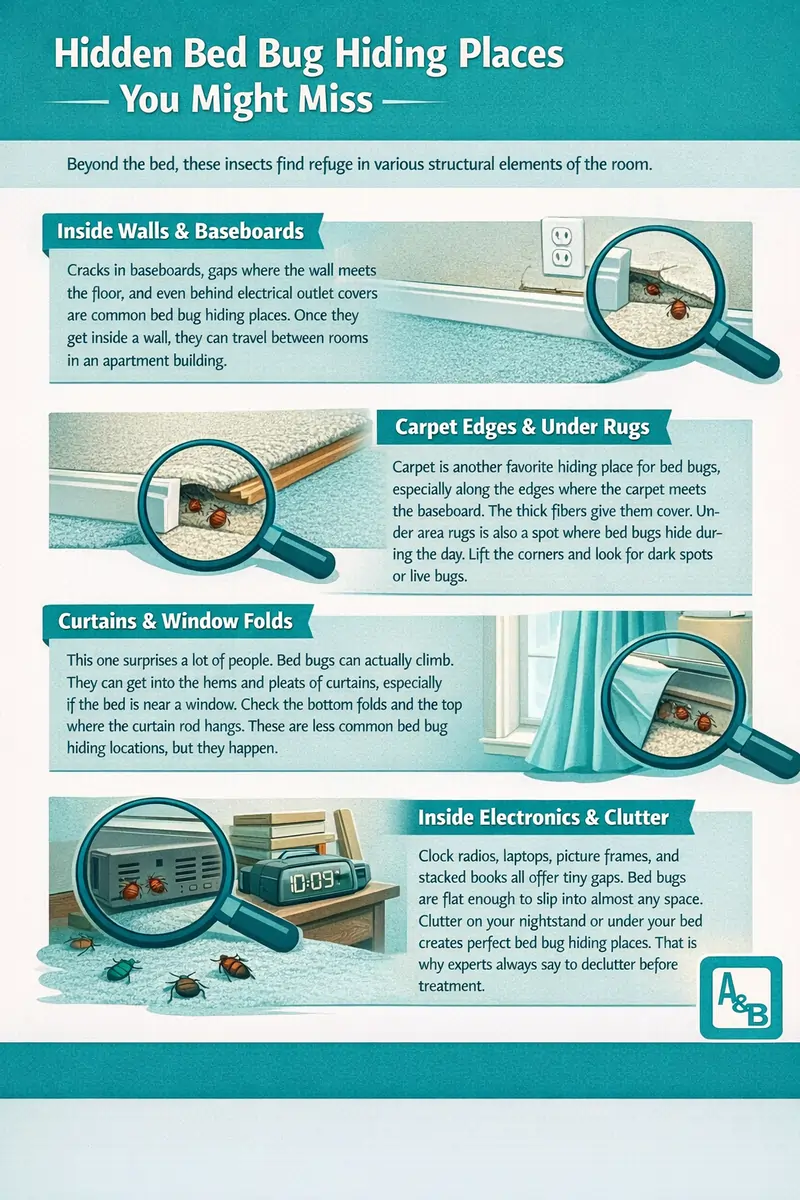
Inside Walls and Baseboards
Cracks in baseboards, gaps where the wall meets the floor, and even behind electrical outlet covers are common bed bug hiding places. Once they get inside a wall, they can travel between rooms in an apartment building.
Carpet Edges and Under Rugs
Carpet is another favorite hiding place for bed bugs, especially along the edges where the carpet meets the baseboard. The thick fibers give them cover. Under area rugs is also a spot where do bed bugs hide during the day. Lift the corners and look for dark spots or live bugs.
Curtains and Window Folds
This one surprises a lot of people. Bed bugs can actually climb. They can get into the hems and pleats of curtains, especially if the bed is near a window. Check the bottom folds and the top where the curtain rod hangs. These are less common bed bug hiding locations, but they happen.
Inside Electronics and Clutter
Clock radios, laptops, picture frames, and stacked books all offer tiny gaps. Bed bugs are flat enough to slip into almost any space. Clutter on your nightstand or under your bed creates perfect bed bug hiding places. That is why experts always say to declutter before treatment.
How to Inspect Bed Bug Hiding Places Correctly
You need a flashlight and a magnifying glass to perform a thorough inspection of your room. Turn off the lights and use a credit card to run along mattress seams. Then look for three things, live bugs, dark spots that look like ink dots, and tiny cream colored eggs or empty shells. Check every spot on this list systematically.
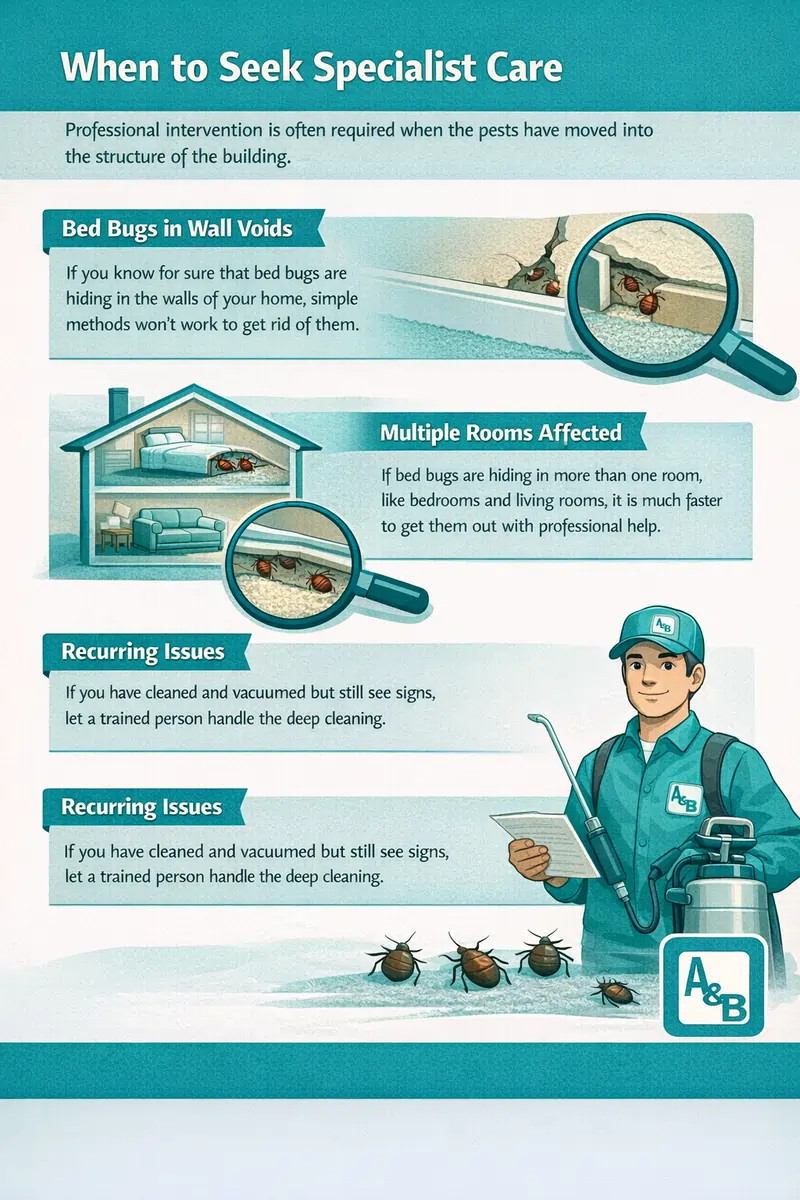
When to Seek Specialist Care
Professional intervention is often required when the pests have moved into the structure of the building.
-
Bed bugs in wall voids: If you know for sure that bed bugs are hiding in the walls of your home, simple methods won't work to get rid of them.
-
Multiple Rooms Affected: If bed bugs are hiding in more than one room, like bedrooms and living rooms, it is much faster to get them out with professional help.
-
Recurring Issues: If you have cleaned and vacuumed but still see signs, let a trained person handle the deep cleaning.
The best way to protect your home is to inspect your bed and furniture every time you change your sheets. Catching one or two bugs early is easy, but catching hundreds is not. If you have found bed bugs in hard to reach spots, do not let another week go by. Contact A and B Carpet NY for inspecting bed bug hiding places.
Frequently Asked Questions
They hide during the day within five to ten feet of your bed. Common places are mattress seams, box spring corners, bed frame joints, nightstand cracks, and baseboard gaps.
Yes, bed bugs can get into walls through cracks and outlets. To check, take off the outlet covers and look for dark spots. Also, inspect baseboards for tiny gaps. You can use a flashlight and a mirror to see inside wall voids.
A good zippered pillow protector stops them from getting inside the pillow. But they can still hide in the protector stitching and the pillowcase. Always inspect the outer fabric of your pillows regularly for bed bug hiding places.
Do bed bugs live inside the mattress? They live in the seams, tufts, and folds. They do not burrow deep into the foam or springs, but they get into any gap in the fabric covering. That is why encasements are so effective.
The most overlooked spots are inside curtain hems, behind wall posters, inside clock radios, under loose wallpaper, and in the folds of luggage. Check these bed bug hiding places if your main areas look clean but bites continue.